

This article explores the role of a Master Systems Integrator (MSI) in coordinating building technologies such as security, AV, networking, communications, and automation systems. It explains why technology projects often fail due to poor planning and fragmented ownership, and how an MSI helps reduce risk, improve integration, streamline support, and ensure systems operate as a unified ecosystem. Those seeking to unify their organization’s technology systems will benefit from reading this whitepaper.
Why Technology Projects Succeed or Fail Before Installation Begins
Modern buildings increasingly rely on a highly connected ecosystem of technology. Security systems, access control, audiovisual platforms, wireless devices, communications tools, life safety, and building automation technologies all play a critical role in how facilities operate and how people experience a space, and they are all connecting to a more unified network for ease of monitoring.
While organizations invest heavily in these technologies for new and renovated buildings, many still encounter the same challenges when installation begins: project delays, increasing change orders, system integration issues, unclear ownership, and frustration when systems don’t work together as expected.
Often the first assumption is that the technology itself is poor. In reality, technology reliability is rarely the root cause.
More often, the problem is a lack of coordination, accountability, and strategic planning long before installation ever begins.
The Growing Complexity of Building Technology
As technology environments become more interconnected, individual systems no longer operate in isolation.
Security platforms depend on network infrastructure. Access control systems integrate with video surveillance. Collaboration technologies rely on networks and bandwidth. Building systems increasingly exchange data across multiple platforms to support operations, monitoring, analytics, and user experiences.
Every technology decision now creates downstream dependencies that influence other parts of the environment.
Yet many teams still manage projects as a series of separate technology initiatives. Different vendors oversee different scopes. Different stakeholders make independent decisions. Different teams establish separate priorities.
As a result, organizations often discover that everyone owns a piece of the technology environment, but no one fully owns the outcome.
Lack of coordination of the entire system creates challenges that many organizations don’t recognize until late in the project lifecycle.
We’ve seen projects where teams installed every individual technology system correctly and operated each one exactly as specified. Security worked. Networking worked. AV systems worked. Every vendor fulfilled their contractual responsibilities.
Yet the environment still failed to deliver the experience the organization expected because no one managed the relationships between those systems during planning and design.
We’ve seen projects where poor scheduling causes costly delays when teams don’t plan the installation order well. Worse, conflicting technology requirements cause costly rework during installation, increasing both costs and delaying project completion.
Stakeholders may treat problems as technical failures when they are actually ownership failures.
Integration Success Starts Before Installation
By the time integration issues become visible during installation, commissioning, or occupancy, they can be expensive, disruptive, and difficult to resolve. The reality is that successful enterprise systems integration rarely happens during deployment. Months earlier, planning, governance, stakeholder alignment, and clear accountability establish it.
This is where a Master Systems Integrator (MSI) provides value.
What Defines a Master Systems Integrator?
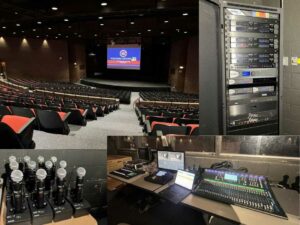 A Master Systems Integrator does more than coordinate vendors or oversee deployments. An MSI understands how technology decisions affect the entire lifecycle of a facility, from planning and design through implementation, support, modernization, and future expansion.
A series of disconnected purchases does not create successful environments. Intentional planning, stakeholder alignment, governance, and a long-term strategy build them by connecting technology investments to operational objectives.
An MSI combines broad technical expertise with consultative capabilities, project management discipline, operational understanding, and support processes.
Most importantly, they take ownership of the outcome.
A Master Systems Integrator acts as the single accountable partner who plans, coordinates, and deploys technologies as part of a unified ecosystem rather than a collection of disconnected projects. Rather than viewing security, networking, AV, communications, infrastructure, and operational technologies as individual scopes, an MSI focuses on how those technologies work together to support organizational objectives, operational workflows, and user experience. All these systems may or may not be connected by Building Management Software (BMS) for a complete view of all technologies in one pane of glass.
An MSI may have the capabilities to design, install, and support all the required technologies. They may be masters of many and coordinate other contractors. Regardless, the goal is not simply to install technology. The goal is to ensure the technology environment functions as intended through the complete lifecycle of the facility.
Technology Debt Isn’t Always Technical
One of the most overlooked challenges facing organizations today is a form of technology debt that has little to do with aging hardware or outdated software. Unplanned change causes some of the most expensive technology debt.
What is Technology Debt?
 Technology debt (also called technical debt) is the future cost and extra work that happens when you choose a fast, easy solution now instead of a better, cleaner, methodical approach. In technology-laden buildings, debt develops when departments solve individual problems without considering how those decisions affect the broader environment.
They implemented a new security solution. They upgraded the collaboration tools. They expand Network infrastructure. They bring in additional vendors to address specific needs. Each decision makes sense independently. Each project appears successful on its own. Suddenly, the environment becomes increasingly difficult to manage. Support responsibilities become unclear. Technology governance varies across locations. Internal teams spend more time coordinating vendors than driving strategic initiatives. Projects require greater effort because teams must align multiple stakeholders and providers before they can move decisions forward.
What began as an exciting opportunity to modernize and take advantage of the latest capabilities turns into a collection of technology investments leading to operational complexity.
The Cost of Fragmentation
During the operational life of technology systems, organizations who need to manage multiple vendors can experience lost productivity, duplicated effort, inconsistent user experiences, and delayed projects as older systems must be understood before action is taken. Organizations ultimately realize they wasted their initial investments, and disconnected decisions create complexity that drives them to make additional investments to replace still capable technology.
Master Systems Integration prevents this type of complexity by establishing governance, ensuring accountability, and aligning technology for the long term before fragmentation embeds itself in the environment. Rather than managing systems individually, organizations will have a framework that aligns systems around business goals and strategy.
Benefits of MSI for Building Owners
For building owners and operators, the benefits continue long after project completion. Integrated technology environments provide a more consistent user experience, simplify long-term support, and establish a scalable foundation for future growth. Organizations operating across multiple locations can standardize systems, processes, and support models, making it easier to deploy, manage, and modernize technology without introducing unnecessary complexity and costs.
Rather than managing multiple providers with competing priorities and separate responsibilities, building owners gain a single strategy, a unified approach to decision-making, and a trusted partner responsible for ensuring technology operate as a complete ecosystem.
Most importantly, they take ownership of the outcome.
One Strategy. One Team. One Accountable Partner.
Building technology has become too interconnected for teams to manage it as a collection of isolated projects. Security, AV, networking, communications, smart infrastructure, and operational technologies all influence one another. Successful outcomes depend on coordinating those relationships from the beginning rather than trying to solve integration challenges after they appear during project completion.
A Master Systems Integrator is a critical part of any project team to ensure a single point of coordination and accountability for technology implementation. An MSI becomes the clear owner, aligned with stakeholders, and developer of the strategy that considers how all the technology will function as a complete ecosystem. Because the MSI provides ongoing support services, it will significantly reduce the Total Cost of Ownership.
