
Illinois legislators continue to strengthen the state’s commitment to school safety, with a growing focus on faster emergency communication and more coordinated response during critical incidents. Among the initiatives under discussion is the implementation of mobile panic alert systems, tools that allow teachers and staff to silently and instantly notify first responders in an emergency.
Beginning in the 2026–2027 school year, this effort aims to establish a more consistent, statewide approach to emergency communication, helping schools and emergency services act quickly and in sync when it matters most. As these expectations evolve, technology partners across Illinois are preparing to help schools meet a higher standard of safety readiness.
Why Instant Emergency Communication Matters

In an emergency, the difference between seconds and minutes isn’t small…it’s everything.
Illinois lawmakers have emphasized a critical reality: delays in communication and limited situational awareness can significantly impact outcomes during school incidents. The U.S. Department of Justice’s critical incident review highlights how breakdowns in communication, situational awareness, and decision-making delayed intervention during a major school emergency. Investigators concluded that earlier, more informed action could have reduced casualties.
Importantly, emergency response challenges extend beyond active threat scenarios. According to the American Academy of Pediatrics, 10–25% of childhood injuries occur at school, reinforcing the need for rapid response across a wide range of medical and behavioral incidents. Yet national preparedness data continues to show gaps in communication clarity, coordination, and campus-wide awareness during emergencies.
Where AI Surveillance Fits In
It’s been said, “AI doesn’t fall asleep.” For schools, that constant awareness matters.
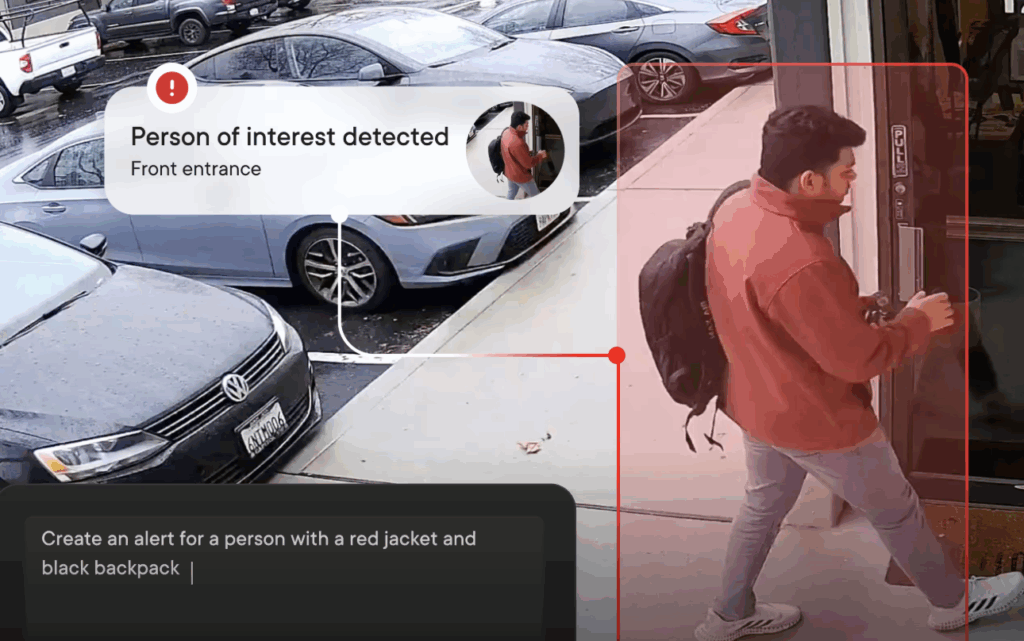
Advanced detection surveillance enables 24/7/365 monitoring, helping schools detect potential risks earlier, respond faster, and investigate incidents more efficiently. Instead of relying solely on human observation or delayed reporting, AI continuously analyzes activity across campus, surfacing concerns as they emerge.
Recent advancements to detection platforms further enhance how schools monitor and respond without requiring additional hardware investments.
Key capabilities include:
- Faster incident investigations through multi-camera journey tracking
- Improved facial recognition accuracy, reducing duplicate or incorrect matches
- Reverse playback for rapid event reconstruction
- Alert pausing to help staff manage notifications during high-activity periods
Beyond investigations, the platform supports proactive detection of potential risks such as trespassing, loitering, unauthorized vehicles, and unusual behavioral patterns. It can also identify missing persons, unexpected crowd formation, and other indicators that allow staff to take action before situations escalate.
Supporting Illinois’ School Safety Direction
Illinois’ approach to school safety is about more than sending alerts, it’s about enabling faster, clearer, and more informed responses.
Panic alert systems are most effective when supported by:
- Early indicators of risk
- Real-time intelligence during an incident
- Clear situational awareness for first responders
Advanced AI surveillance helps close the gap between incident onset and effective response, addressing the same delays consistently identified in federal reviews.
Looking Ahead to Ensure Constant Safety
Illinois’ continued focus on school safety reinforces a clear truth: security strategies must evolve alongside today’s challenges.
Technology alone doesn’t prevent emergencies, but the right intelligence, delivered at the right time, can change how they unfold.
As part of the Partner Alliance for Safer Schools (PASS) initiative, Pentegra aligns its solutions with nationally recognized best practices for layered school security, helping districts move beyond compliance toward comprehensive protection.
Pentegra’s AI surveillance and alert solutions are designed to provide that intelligence, always on, always learning, and always ready to support schools and first responders when it matters most.
As districts prepare for the next phase of safety readiness, now is the time to align policy with technology and build security strategies that extend far beyond compliance.